GlasPort Bio
GasAbate
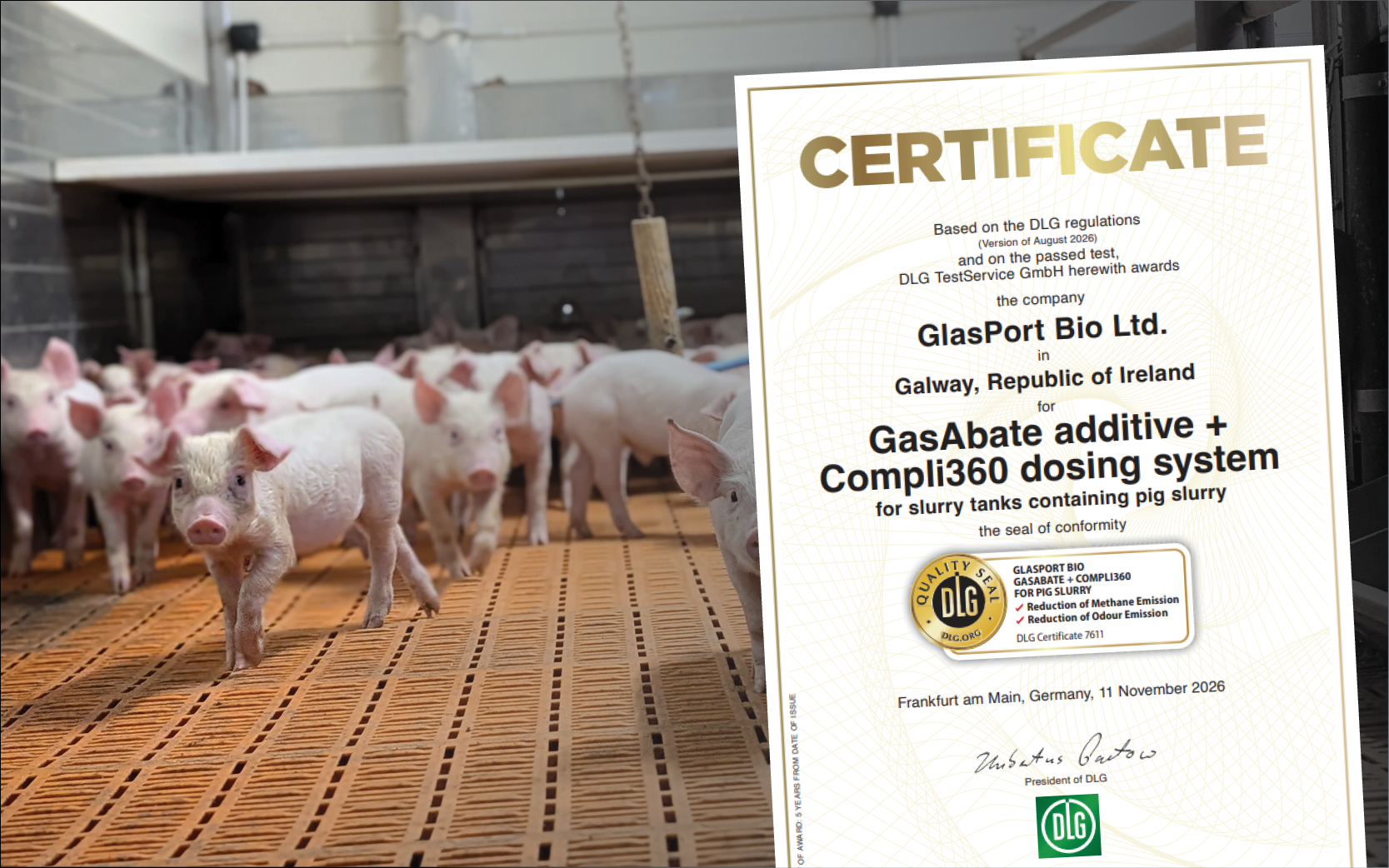

Independent testing confirms a 75.7% reduction in methane emissions and a 79.3% reduction in odour, demonstrating the potential for a new approach to pig manure management.
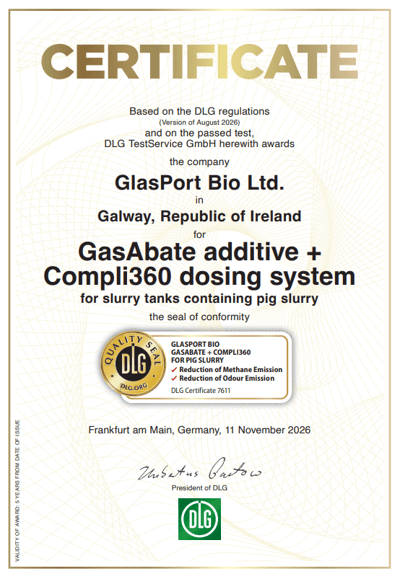
GlasPort Bio has achieved a major milestone with GasAbate receiving DLG certification for the reduction of methane and odour emissions from stored pig slurry. Independent testing of the GasAbate+Compli360 system demonstrated:
75.7% average reduction in methane emissions
79.3% average reduction in odour emissions
The DLG Quality Seal was awarded following independent testing in Germany and Denmark. For GlasPort Bio, the significance goes beyond the certification itself. It provides independent validation that emissions from stored slurry can be materially reduced using a practical technology designed for deployment on commercial farms.
Tackling emissions at storage
Slurry storage represents an important source of agricultural methane emissions. GasAbate is designed to intervene during this storage period, treating slurry on farm without adding significant labour or complexity to normal farm operations.
The DLG results demonstrate that this approach can achieve a substantial reduction in methane emissions while also delivering a major reduction in odour. But we believe the opportunity in the pig sector extends considerably further.
Our objective is to develop a more integrated approach to pig manure management that addresses methane, odour, ammonia, air quality, animal productivity, regulatory compliance and renewable energy potential together. Environmental technology is much easier to scale when the benefits extend beyond carbon and create tangible value for the farmer.
From independent testing to commercial deployment
This approach is now being deployed at Ashleigh Farms in Waterford, a 550-sow integrated pig unit producing approximately 11,000 m³ of slurry annually. The project allows us to examine the benefits of GasAbate across the manure management system rather than looking at methane reduction in isolation.
An important part of the project is what ultimately happens to the treated slurry. The manure will feed into anaerobic digestion, creating the potential to reduce methane emissions while the slurry is being stored, while retaining its value as a feedstock for subsequent renewable energy production.
This could address an important challenge in manure management: preventing methane from escaping uncontrolled during storage while preserving that energy potential for capture in an anaerobic digester.
Looking beyond the slurry tank
The potential benefits also extend back into the pig house. Our ongoing work is examining how improved slurry management can contribute to:
reduced odour
improved air quality
better ammonia management
improved conditions within pig housing
animal performance and productivity
easier environmental and regulatory compliance
lower overall environmental impact
The aim is not simply to introduce another environmental technology on to the farm. It is to build a system that can improve environmental performance while supporting a more productive and efficient pig enterprise.
Creating value from pig manure
There is also a significant opportunity to rethink pig manure as an energy resource. Pig slurry contains substantial organic material, but methane generated during conventional storage is typically lost directly to the atmosphere.
Combining controlled slurry treatment with anaerobic digestion offers a different model: reduce uncontrolled methane emissions during storage and subsequently capture the slurry's remaining energy potential through biomethane production. This is an area of significant focus for GlasPort Bio and one where we expect to have more to say shortly.
From proven technology to impact at scale
The DLG certification is an important independent validation of GasAbate, but certification is not the end objective. The next challenge is deployment at scale.
Technologies capable of materially reducing emissions from agriculture already exist. For widespread adoption, however, farmers need a clear reason to deploy them. That means creating solutions which improve environmental performance without adding unnecessary labour or complexity, while delivering benefits that can include productivity, compliance, energy production and improved farm management.
It also requires a regulatory framework that recognises and rewards verified emissions reductions, allowing the environmental value created on farm to be shared across the food supply chain rather than leaving farmers to carry the entire cost of delivering a wider societal benefit.
For GlasPort Bio, the DLG certification represents an important step towards that goal:
75.7% less methane
79.3% less odour
Independently tested and DLG certified
And we believe this is only the beginning of what GasAbate can deliver for the pig sector.
If you would like to discuss how GasAbate could help your business reduce emissions, improve manure management and create additional value from slurry, get in touch with the GlasPort Bio team.