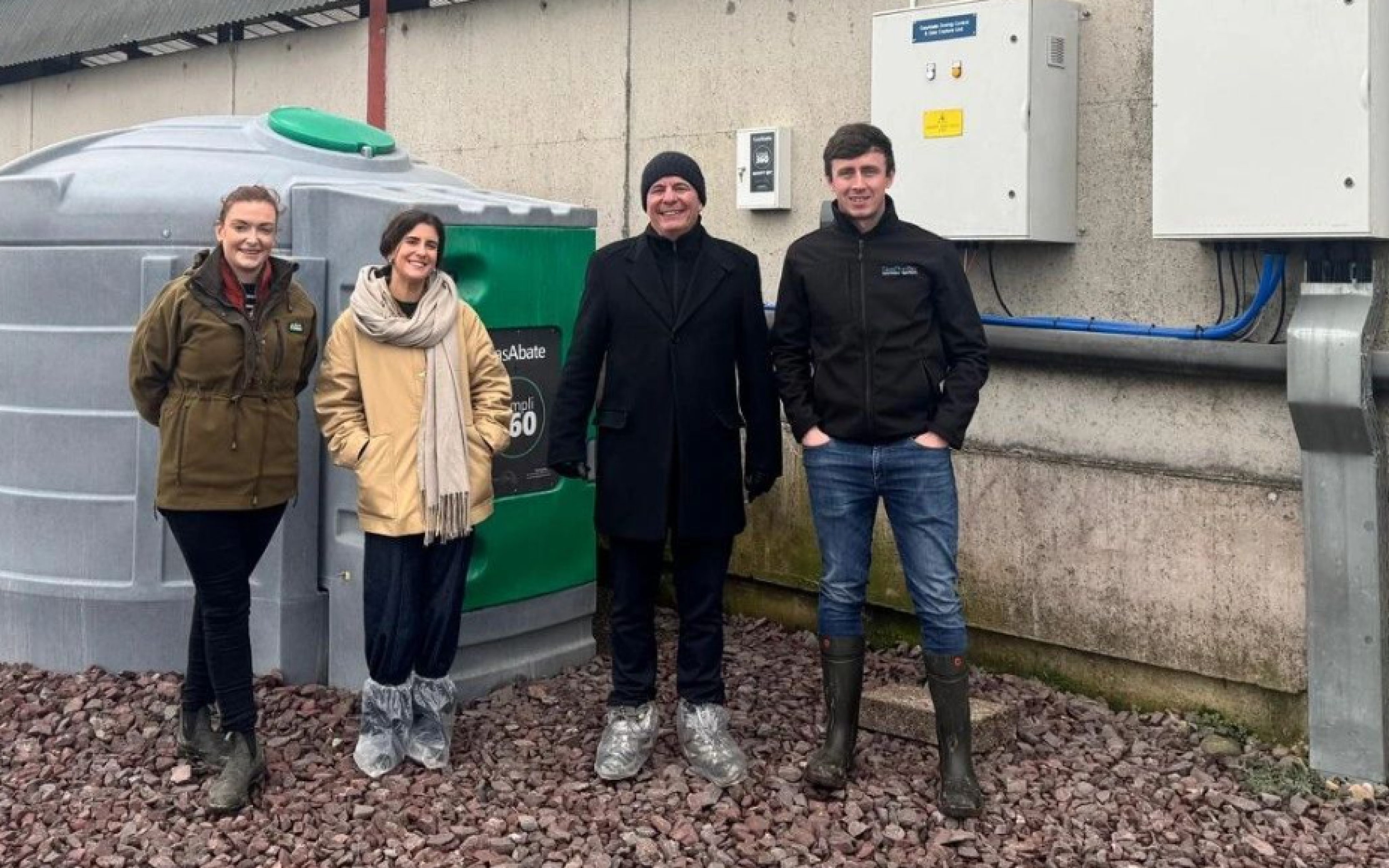
Teagasc knowledge transfer experts met recently in Cork to see how methane emissions from slurry can be reduced on farms by 78%, helping to meet Ireland’s carbon reduction targets.
GlasPort Bio hosted a demonstration of its methane-reducing technology, GasAbate, for Teagasc Signpost researchers and advisers on Carbery Group’s and BiOrbic’s climate-neutral project, Farm Zero C, based at Shinagh Estates Dairy Farm, Bandon, as well as on a commercial Carbery farm nearby.
GasAbate can reduce methane emissions from stored cattle and pig slurry by 78%. Depending on the level of intensity, this can reduce carbon emissions from 0.3t to 1.8t of carbon dioxide equivalent (CO₂e) per cow per year.
Dairy farms that use GasAbate to treat slurry can cut the carbon emissions per litre of fat and protein-corrected milk by 7% to 28%, depending on their intensity.
GasAbate has also been shown to reduce emissions by 1.84t CO₂e per sow place per year, or nearly 1,000t CO₂e on a 500-sow unit.
GasAbate also reduces hydrogen sulphide by 80% and ammonia by up to 50%, while protecting the nutrient value of the treated slurry to maximise crop growth.
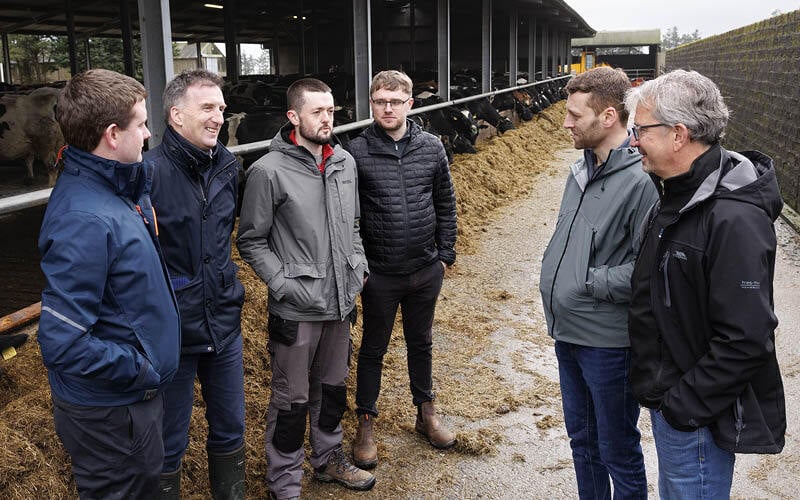
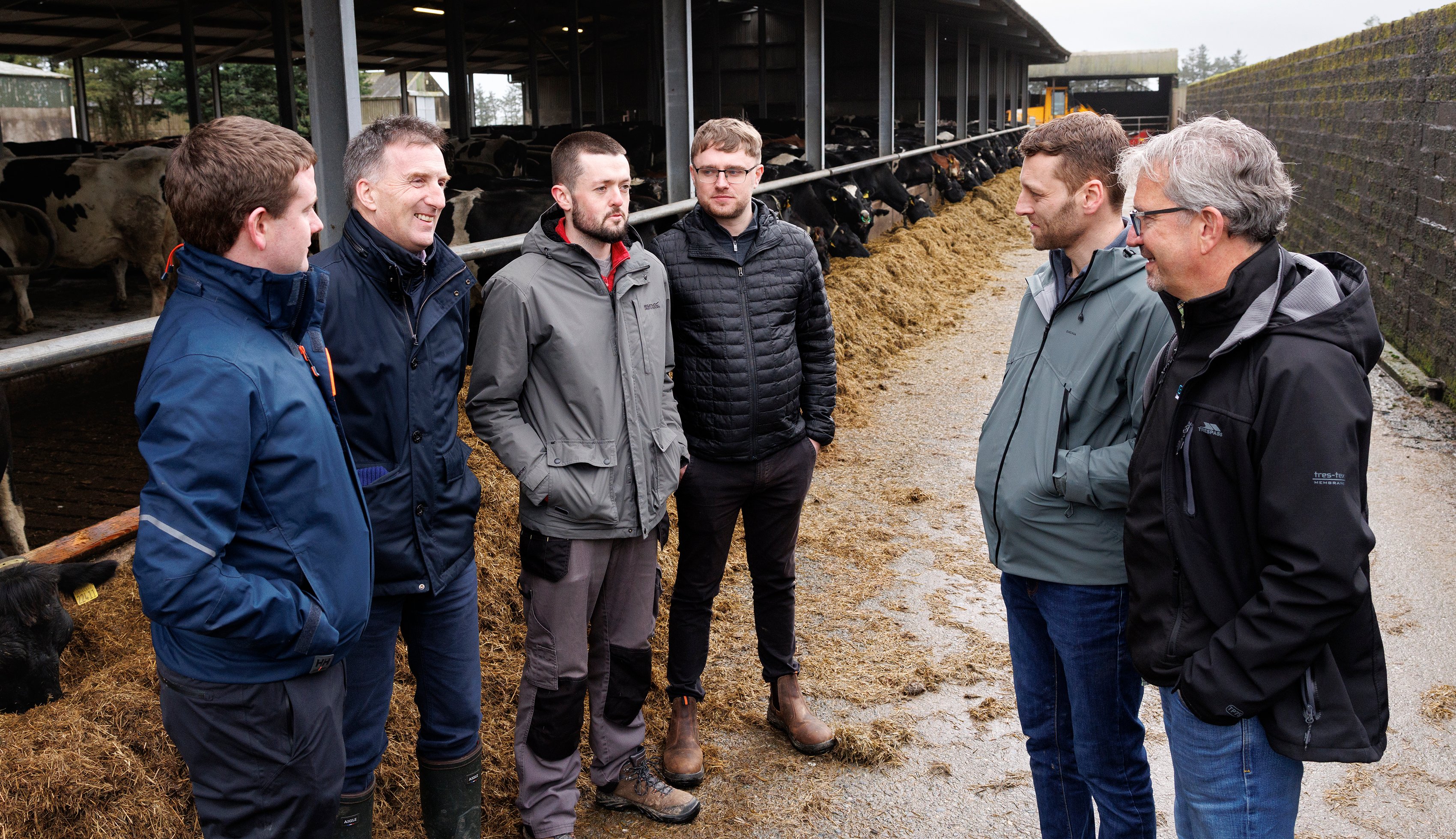
Dermot Hughes and Prof Vincent O' Flaherty of GlasPort Bio (right) explaining the automated GasAbate system for reducing methane in farm slurry at the Carbery Group and BiOrbic’s climate-neutral project farm, Farm Zero C, based at Shinagh Estates Dairy Farm, Bandon, Co Cork to Jack Kennedy, Teagasc, Tom O'Dywer, Teagasc, Shaun Connolly, Teagasc and Padraig Walsh, Carbery.
Professor Vincent O’Flaherty of GlasPort Bio showed Teagasc advisers how GasAbate is applied in a farm setting, and how the MRV (measure, record, verify) system measures the slurry volumes, GasAbate levels applied, and how the methane emission reductions are reported.
Carbon Trust
GasAbate recently received third-party assurance for its impact on greenhouse gas emissions from the Carbon Trust, the globally recognised independent climate consultancy.
GlasPort Bio CEO Justin McCarthy said the biotech firm was delighted to showcase the commercial rollout of its technology to Teagasc on the Carbery farms.
“We have a long-standing partnership with Carbery Group and its sustainability team, led by Enda Buckley, having installed the first system on its climate-neutral project farm, Farm Zero C, four years ago.
“More recently we rolled the technology out across a further nine Carbery farms in 2025 with the support of Climate KIC,” he said.
GasAbate is also being installed on farms in the UK and Sweden.
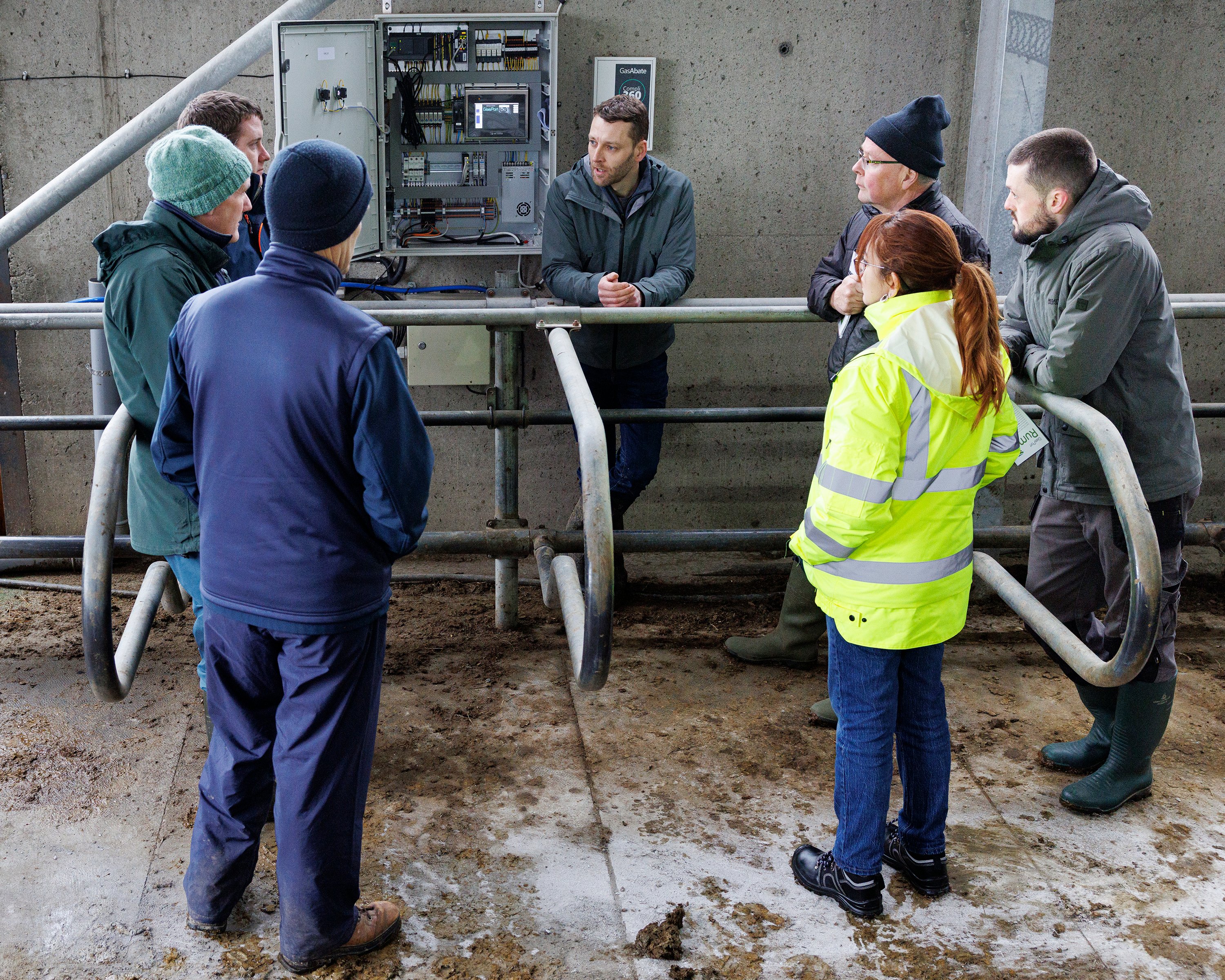
Dermot Hughes of GlasPort Bio explaining to Teagasc Signpost research and advisory staff the automated GasAbate system for reducing methane in farm slurry on the Shinagh Estates Gurteen Dairy farm near Bandon, Co. Cork.
Carbery Farm Zero C Project Manager Padraig Walsh said: “It’s fantastic to see the GlasPort Bio GasAbate system beginning to be rolled out across the Carbery catchment. Shinagh Estates has committed to trialling a number of different technologies as part of Farm Zero C project, and it is a great achievement for us to see more farmers being able to deploy these technologies.
“The uptake of more slurry amendment systems highlights the commitment from farmers in west Cork to reduce emissions from the dairy sector. We are grateful to GlasPort Bio and ClimateKIC for giving us the opportunity to demonstrate this.”
Shaun Connolly, Teagasc research officer in manure emissions, said: “Visiting the farm and seeing GasAbate in action was very encouraging. New slurry-management technologies that are underpinned by sound science are an important area of innovation.
“Teagasc has long supported greenhouse-gas reducing technologies and is focused on delivering real benefits for farmers,” said Connolly, who is based in Teagasc Johnstown Castle.